
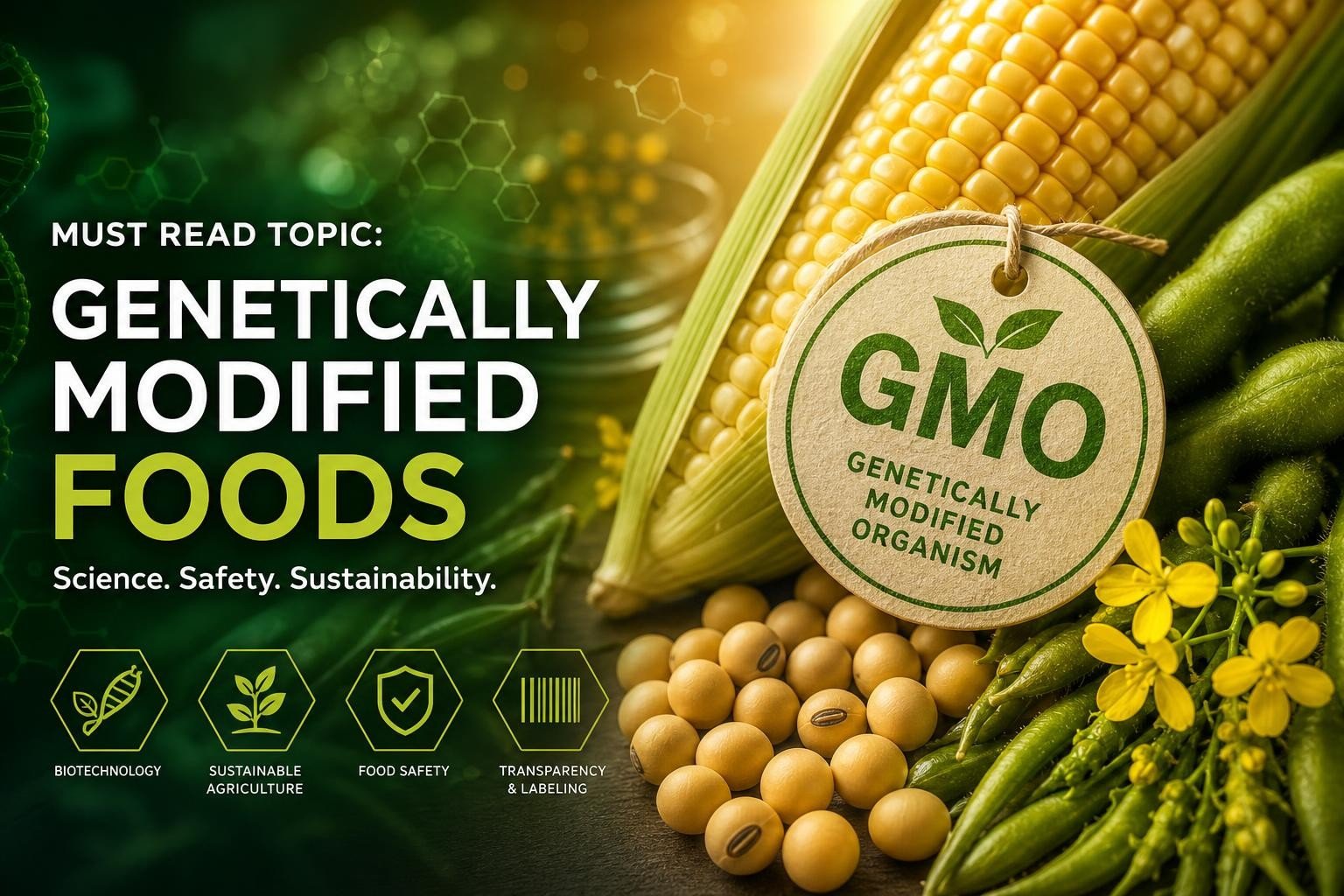
The claim that 80% of the food people eat is genetically modified is not supported by reliable global evidence. Genetically modified, or GM, foods account for a significant share of some crops in certain countries, but the figure varies sharply by crop, market and region. Many foods are also made with ingredients derived from GM crops without being genetically modified themselves.
In the United States, for example, GM varieties are widely used in commercial production of crops such as soybeans, corn, canola, sugar beets and cotton. In other markets, cultivation and labeling rules differ. The European Union permits some GM food and feed products but has generally seen limited commercial cultivation compared with the US and several Latin American countries.
The list below covers ten GM crops, ingredients or food products that consumers may encounter. “Common” does not mean that every item is genetically modified, nor that people in every country eat it regularly.
1. Corn and corn-based ingredients
GM corn is widely grown in several major agricultural markets. It may be sold as fresh corn, but much of the crop enters processed foods, animal feed or industrial supply chains. Ingredients such as corn starch, corn syrup, maltodextrin and corn oil may come from GM corn, depending on the country and the product.
GM corn varieties have been developed for traits including insect resistance and tolerance to specific herbicides. Regulatory agencies assess approved varieties before they enter the food supply. The US Food and Drug Administration’s agricultural biotechnology resources explain how the agency evaluates foods from genetically engineered plants.
2. Soybeans and soybean ingredients
GM soybeans are used extensively in agriculture, particularly for animal feed and processed food ingredients. Soy flour, soybean oil, soy protein and lecithin can appear in packaged foods ranging from sauces to baked goods.
As with corn, the presence of a soybean-derived ingredient does not by itself show whether it came from a GM crop. That information depends on the product’s supply chain, labeling rules and certification. People with soy allergies should focus on the ingredient itself, since allergen status is separate from genetic modification.
3. Canola oil
Canola is a major source of cooking oil in North America and other markets. Many commercial canola varieties are genetically modified for herbicide tolerance. Refined canola oil contains very little protein, which is the component generally associated with the introduction of a new genetic trait, but labeling requirements still vary by jurisdiction.
Consumers who want to avoid GM ingredients can look for certified organic products or non-GM labeling where those standards are available. These labels address production methods and sourcing, not necessarily whether a food is safer or more nutritious.
4. Sugar from sugar beets
In the US, a large share of sugar beets are grown from genetically modified seed. Sugar made from sugar beets is highly refined, and the final product is chemically equivalent to conventional beet sugar. It is used in sweets, beverages, cereals and many other processed foods.
Not all refined sugar is beet sugar. Cane sugar comes from sugar cane, and the production methods differ. A product label may identify the type of sugar, but it may not always identify the crop’s growing method unless local rules require that information.
5. Cottonseed oil
Cotton is primarily grown for fiber, but its seeds can be processed into cottonseed oil. The oil is used in some packaged foods, frying applications and shortening. Because genetically modified cotton is widely cultivated in several countries, cottonseed oil may enter food supply chains in those markets.
Cottonseed oil is less visible to consumers than corn or soybean oil, but it illustrates how a GM crop can reach the food system through a secondary product rather than as a whole food.
6. GM potatoes
Some genetically modified potato varieties have been approved for commercial sale. Their traits have included reduced bruising, slower browning and, in some cases, changes intended to reduce the formation of certain compounds during high-temperature cooking.
Availability depends heavily on the market. A potato sold in one country may not have a GM counterpart in another. Consumers should check packaging and local labeling guidance rather than assume that all potatoes share the same production method.
7. Papaya
Genetically modified papaya was developed to resist papaya ringspot virus, which severely damaged papaya production in Hawaii. Virus-resistant papaya has been grown commercially in Hawaii, although the variety represents only part of the papaya sold internationally.
Fresh papaya is usually sold with its country or region of origin. That information can help shoppers understand the agricultural context, but it does not replace a formal GM or non-GM label.
8. Summer squash
Some varieties of zucchini and yellow summer squash have been genetically modified for resistance to certain viral diseases. These varieties have been approved in the US, but their presence in the market is limited compared with major commodity crops such as corn and soy.
Because the crop is sold as a fresh vegetable, its availability can vary by grower, retailer and season. It would be inaccurate to describe all zucchini or summer squash as genetically modified.
9. Apples designed to brown more slowly
Some apple varieties have been genetically modified to reduce browning after cutting or bruising. The trait is intended to preserve appearance and may be relevant to sliced-apple products, food-service operations and packaged snacks.
These apples are a niche product compared with conventional apples. Shoppers who want to identify them should consult the package label and the rules in their market. The presence or absence of browning is not, on its own, proof of genetic modification.
10. Genetically modified salmon
A genetically modified Atlantic salmon has received regulatory approval for food production in the US and Canada. It was developed to reach market size more efficiently under controlled farming conditions. Its commercial availability and labeling depend on the country, producer and distribution channel.
GM salmon is not a routine purchase for most consumers, so placing it alongside widely used crops requires some qualification. It belongs on this list because it is an approved GM food product, not because it is consumed daily by people everywhere.
What “genetically modified” means on a food label
Genetic modification refers to changing an organism’s genetic material using biotechnology. It is distinct from conventional breeding, although both can be used to develop crops with useful traits. A food made with a GM ingredient is not necessarily itself a living genetically modified organism. Refined oils, starches and sweeteners are examples of products that may be derived from GM crops.
Health assessments focus on the characteristics of the final product, including allergenicity, nutritional composition and potential toxicity. The World Health Organization’s overview of genetically modified foods notes that safety must be evaluated case by case rather than assumed for every product in the category.
The US Department of Agriculture’s data on genetically engineered crop adoption provides a clearer picture of how use differs by crop. Adoption rates for some crops are high in the US, while other crops remain largely conventional or have limited commercial use.
How consumers can check their food choices
People who want more information should read the ingredient list, check for voluntary non-GM or organic certification, and consult the labeling rules that apply where they live. Organic standards generally prohibit genetic engineering, but organic certification does not mean a product is automatically more nutritious or safer than a conventional alternative.
For practical guidance, see our Food and Health section and our guide to understanding food labels. The central point is straightforward: GM food use is substantial in certain crops and markets, but the claim that 80% of all food is genetically modified overstates the available evidence.