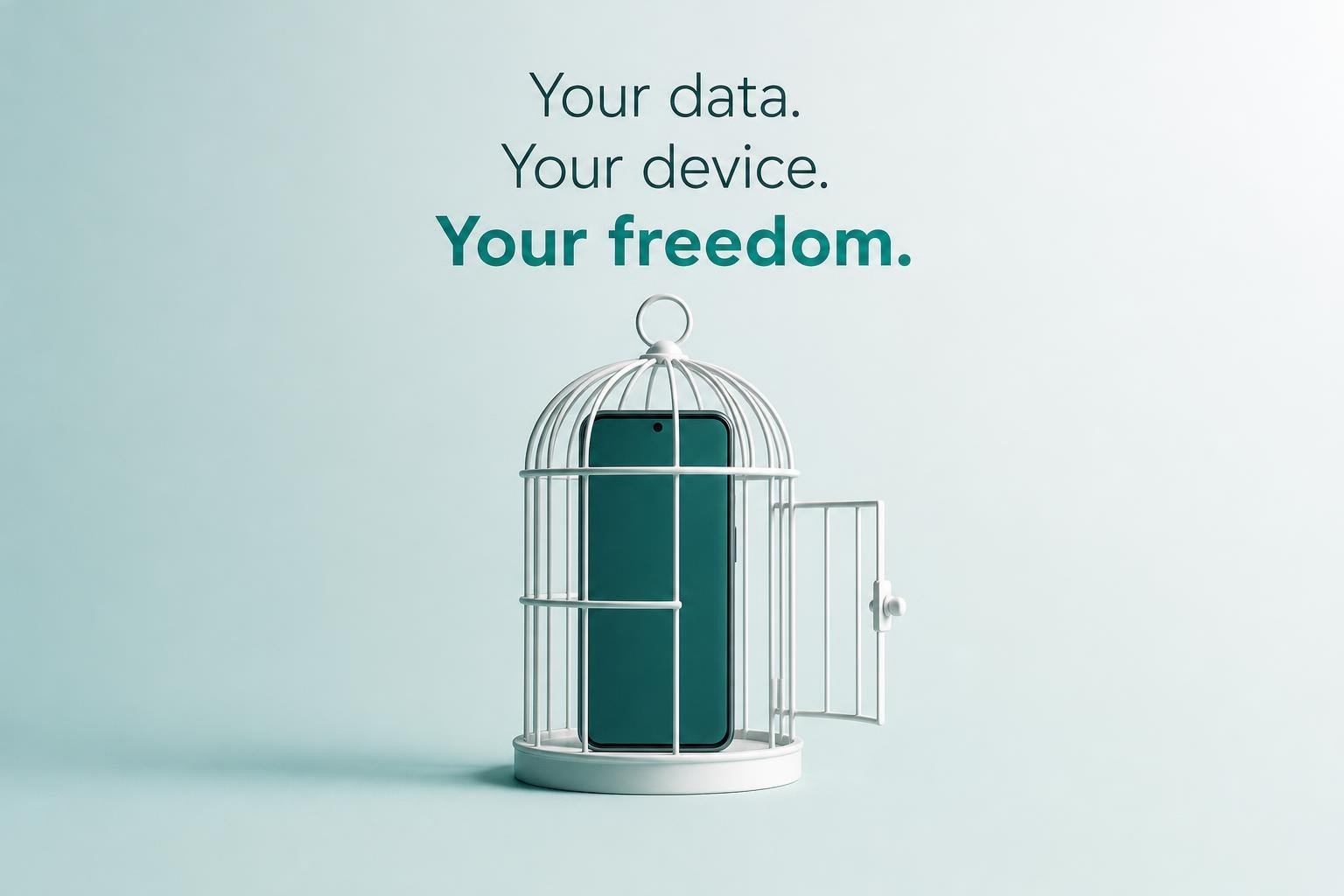
Top 10 Android Alternatives for a De-Googled Smartphone
Google’s Android dominates the global smartphone market, but the standard Android experience is closely tied to Google Mobile Services, the Play Store, account-based synchronization and telemetry. Users who want more control over their data have several alternatives, although they differ significantly in privacy, hardware support, app compatibility and update policies.
Some of the operating systems below are Android-based projects built from the Android Open Source Project, or AOSP. Others, including Ubuntu Touch, postmarketOS and Sailfish OS, take a different approach and are better viewed as alternatives to Android rather than conventional Android forks.
Before installing any alternative OS, check the project’s supported-device list, bootloader requirements, update record and app compatibility. A de-Googled phone can be useful for privacy-conscious individuals, developers and organizations, but financial apps, streaming services and enterprise tools may rely on Google services or device-integrity checks.
For more coverage of mobile platforms and open-source technology, visit our Innovation and Technology section.
1. GrapheneOS
GrapheneOS is one of the strongest options for users who want a security-focused, Google-free Android experience. It is based on the Android Open Source Project and is designed around hardening, permission controls and reduced reliance on privileged system components.
GrapheneOS is most closely associated with supported Google Pixel devices. That hardware focus allows the project to align its software with devices that offer strong security features and long-term update support. Google applications can be installed in a more contained way, but they are not required for the operating system to function.
2. /e/OS
/e/OS, developed by the Murena organization, is designed for people who want a familiar smartphone experience without depending on Google’s ecosystem. It replaces many Google services with privacy-oriented alternatives and provides its own account, cloud and application-store services.
Its appeal is convenience. Murena sells some devices with /e/OS preinstalled, while supported phones can also be installed by experienced users. Device coverage and feature support vary, so buyers should review the official compatibility information before choosing a handset.
3. LineageOS
LineageOS is one of the best-known open-source Android distributions and supports a broad range of devices. It offers a relatively clean Android interface, regular community development and a large knowledge base for installation and troubleshooting.
LineageOS itself does not require Google applications. Users can install an alternative app source, add a compatible Google package or use a service layer such as microG where supported. The experience depends heavily on the device maintainer, and official support should be distinguished from unofficial builds distributed elsewhere.
4. CalyxOS
CalyxOS combines an Android-based interface with privacy tools, optional microG support and a focus on making de-Googling accessible to non-specialist users. Its setup process and default configuration are intended to reduce the technical barrier associated with custom ROMs.
CalyxOS has historically supported a selected range of phones rather than attempting to cover every Android model. Prospective users should check the project’s current development status, supported devices and installation guidance before switching.
5. iodéOS
iodéOS is an Android-based privacy operating system that emphasizes reduced tracking and network-level blocking. It can be installed on selected devices, and the company also offers phones configured with its software.
iodéOS may suit users who want a ready-made privacy layer rather than a minimal operating system requiring extensive configuration. Its privacy model, included services and licensing terms should be reviewed carefully, particularly by organizations evaluating the platform for managed devices.
6. crDroid
crDroid is a feature-rich Android custom ROM built on AOSP and related open-source projects. It is known for extensive customization, including interface controls and system behavior that may not be available in a manufacturer’s Android build.
crDroid can be used without Google applications, but the exact experience depends on the installation package and device build. Users should download software only from the project’s official channels and confirm whether the selected build includes or permits optional proprietary components.
7. Evolution X
Evolution X is another Android custom ROM aimed at users who want a modern interface with additional customization features. It is popular among enthusiasts who are comfortable unlocking a device and replacing the manufacturer’s software.
Evolution X should not automatically be treated as a fully de-Googled platform. Builds and installation packages can differ, and some may include Google applications or offer them as an optional component. Anyone seeking strict Google independence should inspect the specific build before installation.
8. Ubuntu Touch
Ubuntu Touch, maintained by the UBports community, is a Linux-based mobile operating system rather than an Android fork. It provides a distinct user interface and application model, with an emphasis on open-source software and community-led development.
Ubuntu Touch can be attractive to users who want to move beyond the Android application ecosystem entirely. The trade-off is a smaller app catalogue and more limited hardware support than mainstream Android. Compatibility with desktop Linux workflows can be valuable, but common commercial mobile apps may not be available in native form.
9. postmarketOS
postmarketOS brings a Linux distribution model to smartphones and is built around the idea of extending device life. It supports several user interfaces and targets a wide range of hardware, although the quality of support can vary substantially from one device to another.
postmarketOS is best suited to technically capable users, developers and people interested in experimenting with mobile Linux. On some phones, core functions such as calls, cameras, suspend or cellular connectivity may not offer the same maturity found in Android-based systems.
10. Sailfish OS
Sailfish OS is a Linux-based mobile platform developed by Jolla and its community. It is distinct from Android and is known for gesture-based navigation and an alternative approach to mobile software.
Sailfish OS is not fully open source in every component, so it does not meet the same definition of openness as a purely community-built AOSP distribution. It remains relevant for users who want a non-Google mobile platform and are willing to assess licensing, device support and Android-application compatibility on a case-by-case basis.
What to check before leaving standard Android
The most important decision is hardware. An operating system may be technically available for a phone but lack complete support for its camera, fingerprint reader, modem or software updates. Official builds are generally preferable to unknown downloads because maintainers can communicate security fixes and installation requirements more clearly.
App compatibility is the second major consideration. Open-source app stores such as F-Droid can cover many privacy, productivity and utility needs, but they do not replicate the full commercial catalogue of Google Play. Some projects offer microG or similar compatibility layers. These can improve access to applications that expect Google APIs, but they are not identical to Google Mobile Services.
Finally, consider the operating model behind the project. A community ROM may offer strong transparency but depend on a small number of volunteers. A commercial provider may deliver easier installation, support and cloud services, but users should examine its privacy policy and business model. Security updates, documentation and a realistic device-support plan matter more than a long feature list.
The practical choice
GrapheneOS is the clearest option for users prioritizing hardened security on supported hardware. /e/OS and iodéOS are more approachable for people who want a packaged privacy experience. LineageOS offers broad community recognition and device coverage, while crDroid and Evolution X focus more heavily on customization. Ubuntu Touch, postmarketOS and Sailfish OS are better choices for users prepared to accept a smaller mobile application ecosystem in exchange for a different platform model.
There is no universal replacement for Android. The right choice depends on whether the priority is privacy, software freedom, long-term device use, customization or independence from Google services. Comparing the project’s official documentation with the needs of the specific phone is the safest route to a successful transition.