AI filmmaking is moving from experimental short clips toward a more structured production workflow. By 2027, the strongest platforms are likely to be judged less by a single impressive demo and more by how well they handle story development, visual consistency, editing, sound, rights management and team collaboration.
A definitive 2027 ranking cannot be verified in advance. The selection below is therefore a forward-looking guide based on the platforms’ current direction, public product development and potential value to filmmakers, studios, agencies and independent creators. Features, pricing and availability may change.
How the platforms were selected
The comparison focuses on five practical questions: Can a platform support repeatable visual work? Does it fit into an existing production pipeline? How much control does it offer over characters, camera movement and style? Are commercial-use and rights questions addressed clearly? And can the product scale beyond isolated social-media clips?
Readers assessing the wider market may also find our guide to AI video production workflows useful when comparing tools for development, production and post-production.
1. Runway
Runway remains one of the most visible names in generative video and is a strong candidate for filmmakers seeking an integrated creative environment. Its appeal lies in the combination of text-to-video, image-to-video, editing and visual effects tools within a product built specifically around moving-image creation.
For 2027, Runway’s competitive position will depend on how effectively it improves temporal consistency, character control and shot-to-shot continuity. Those capabilities matter more to narrative filmmakers than producing a striking single frame. It is likely to remain particularly relevant to creative agencies, music-video producers and independent directors testing concepts before committing to a full shoot.
2. Google Veo
Google Veo is a major platform to watch because Google can connect generative video with its broader cloud, research and creative-technology ecosystem. Its potential strength is the ability to produce cinematic-looking sequences from detailed prompts while giving creators greater control over motion, framing and visual intent.
The central question for 2027 will be accessibility. A powerful model becomes more useful to production companies when it can be integrated into manageable workflows, reviewed by teams and connected to storage, collaboration and post-production systems. Veo may appeal to studios and enterprises that value scale, infrastructure and integration as much as image quality.
3. OpenAI Sora
OpenAI Sora has attracted attention for its ability to generate video from natural-language descriptions and visual references. Its long-term filmmaking value will depend on whether it can move from short-form generation toward reliable sequences that preserve characters, environments and physical logic across multiple shots.
Sora could become especially useful during pre-production. Directors may use it to explore visual concepts, storyboard scenes, test pacing or communicate an idea to producers before filming begins. Professional adoption will also depend on transparent policies around training data, content ownership, safety controls and commercial usage.
4. Adobe Firefly Video
Adobe Firefly is positioned differently from model-first video platforms. Its principal advantage is its relationship with established creative software, including tools used for editing, compositing, design and post-production.
That workflow connection could make Firefly Video one of the most practical choices for professional teams in 2027. Editors and designers may prefer a system that fits into familiar production environments rather than requiring an entirely new pipeline. Commercial safety and enterprise controls could also be important differentiators for agencies, broadcasters and brands operating under strict review processes.
5. Luma Dream Machine
Luma Dream Machine has become a notable option for creators who want fast access to generative video tools. Its appeal is likely to remain strongest among independent filmmakers, small studios and creative teams that need to develop visual ideas quickly without the infrastructure of a large production house.
Its place in the 2027 market will depend on improvements in continuity, controllability and export options. Speed is valuable during ideation, but a platform must also provide enough precision for a final sequence to survive editorial review. Luma’s ability to balance ease of use with professional control will determine whether it remains primarily a concept tool or becomes part of a complete filmmaking pipeline.
What filmmakers should evaluate before choosing
Platform selection should begin with the project rather than the demo reel. A filmmaker developing a short narrative may prioritize character consistency and shot control. A commercial team may care more about brand governance, collaboration and licensing. A studio could place greater weight on security, predictable costs and integration with existing editorial systems.
Rights and disclosure policies deserve close attention. Generative video products can differ in their treatment of training data, user inputs, outputs, likenesses and commercial use. Policies can also change as regulation develops across major markets. Before production begins, teams should review the provider’s current terms and document how AI-generated material is used.
Our coverage of AI film industry trends offers additional context on the business and creative issues shaping adoption. For a broader technology perspective, see the generative AI business guide.
The likely 2027 winner may be the best workflow, not the best demo
The leading AI filmmaking platform in 2027 may not be the one that creates the most photorealistic clip. It may be the service that helps a team move from script and storyboard to approved sequence with the fewest unresolved production, legal and editorial problems.
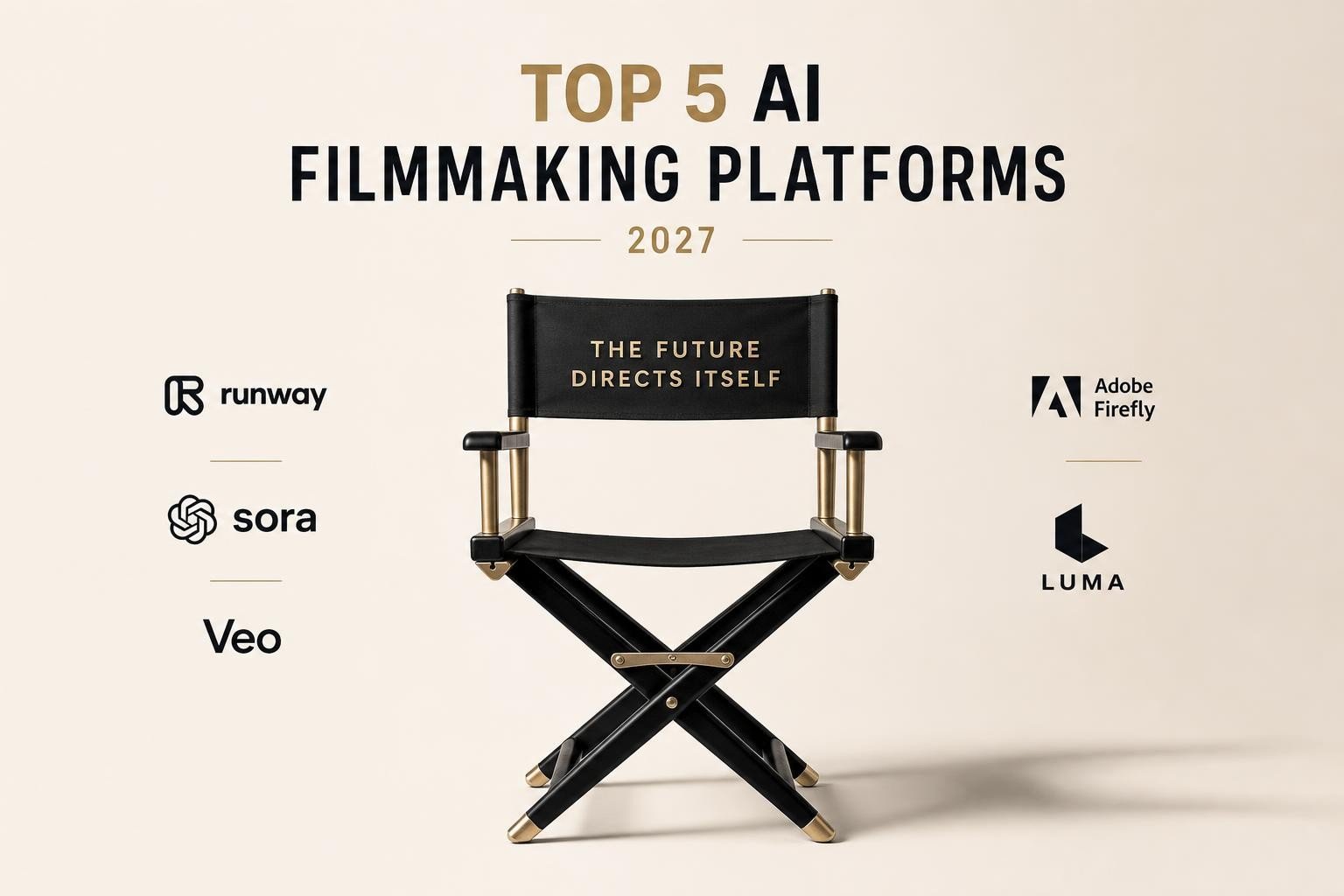
Runway, Veo, Sora, Firefly Video and Luma each represent a different route into that market. Their relative positions will change as models improve, regulations mature and filmmakers become more demanding. For buyers, the sensible approach is to test each platform against a real workflow, not a promotional showcase.