
Pedro Sánchez has called early elections in Spain before, but November 29 does not match the date of a general election held under his premiership. The most likely source of confusion is Spain’s 2019 election, which took place on November 10 after months of political deadlock.
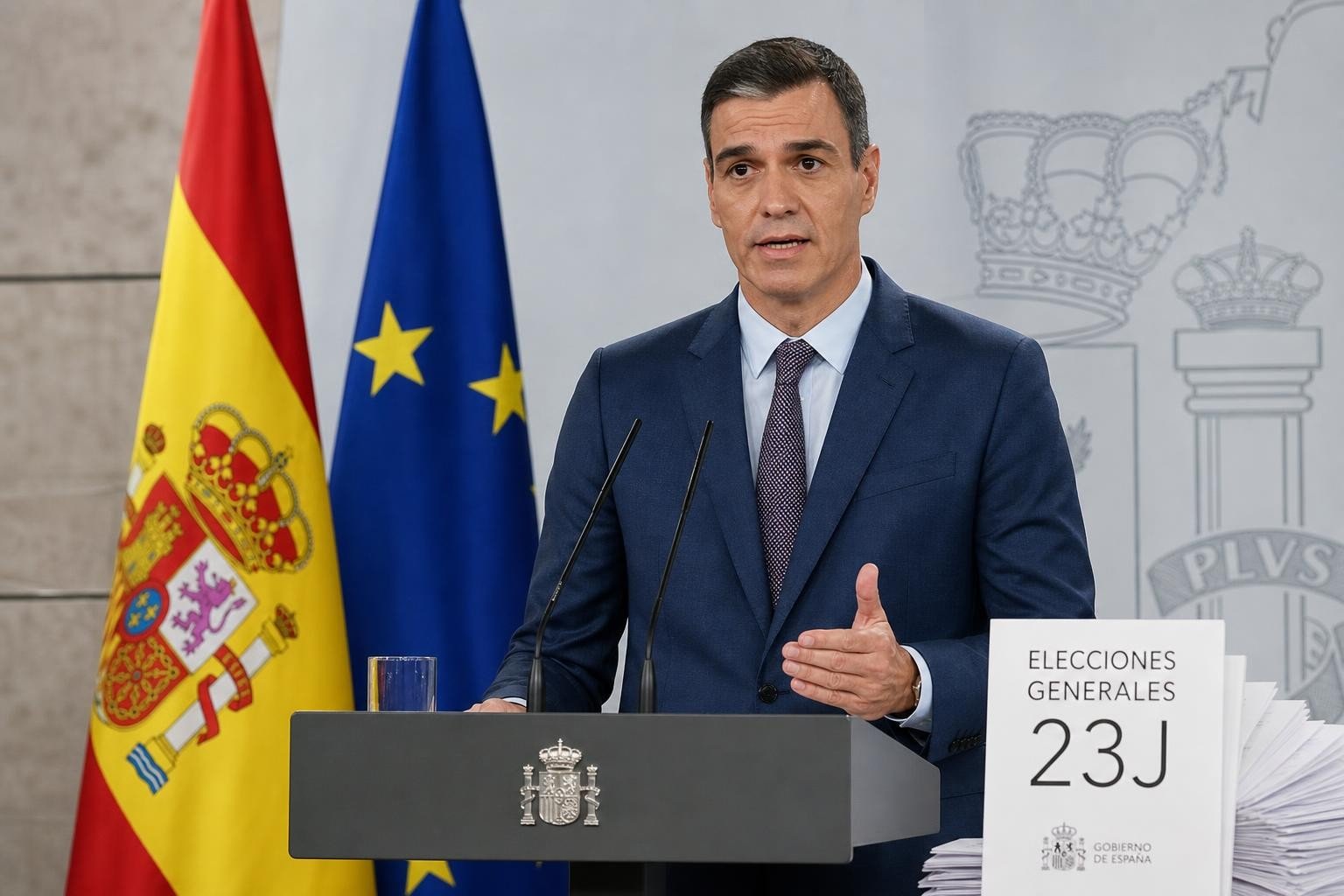
Spain’s next general election was held on July 23, 2023. Sánchez announced that vote on May 29, one day after the Socialist Party suffered significant losses in regional and municipal elections. Any account describing a Sánchez election on November 29 therefore needs to be checked against the official electoral record.
What happened before the November 2019 election?
The 2019 episode followed Spain’s inconclusive general election of April 28. The Socialist Party won the largest number of seats but fell short of a majority. Sánchez remained dependent on negotiations with smaller parties to form a government.
Those negotiations failed. Parliament was unable to approve a prime minister within the constitutional deadline, and the Cortes Generales was dissolved. Voters returned to the polls on November 10, producing another fragmented result. Sánchez eventually formed a coalition government with Unidas Podemos, which took office in January 2020.
The central reason for the early vote was therefore not a decision to hold an election on November 29. It was the failure of the parties to reach an investiture agreement after the April election. Spain’s constitutional system provides for new elections when parliament cannot produce a government within the required period.
Why Sánchez called the 2023 election early
The 2023 election followed a different political shock. Local and regional elections held on May 28 delivered a strong result for the conservative Partido Popular and a setback for Sánchez’s Socialist Party. Rather than continue governing with weakened authority, Sánchez announced the dissolution of parliament the following day.
The decision brought the general election forward from the end of the parliamentary term to July 23. Sánchez presented the move as a way for voters to decide the country’s direction after the regional results. It also prevented months of uncertainty at a time when Spain was preparing to assume the rotating presidency of the Council of the European Union.
The election produced another divided parliament. The Partido Popular won the most seats, but neither the right-leaning bloc nor the left-leaning bloc initially had a clear path to a majority. After negotiations, Sánchez secured support from regional parties and was sworn in for another term in November 2023.
Why the distinction matters for business
Election timing affects Spain’s budget process, regulatory agenda and relationship with European institutions. A failed investiture can delay legislation and public spending decisions. A government that calls an early election after a regional defeat may be seeking a fresh mandate, but it also introduces uncertainty for companies, investors and public administrations.
For businesses operating in Spain, the important questions are less about a single date than about whether a new parliament can pass budgets, implement European recovery programmes and sustain policies on energy, labour and taxation. The country’s coalition politics make parliamentary arithmetic central to each of those decisions.
Readers can consult the Spanish Congress for parliamentary information and the Spanish government’s official news archive for statements from the prime minister’s office. For more coverage of European political risk and its commercial consequences, see our Global Affairs and Policy section and related Investing and Finance analysis.
In short, the premise requires correction: Sánchez did not call a Spanish general election for November 29 according to the established record of the 2019 and 2023 elections. The November date associated with his earlier political crisis was November 10, while the early election he called after the 2023 regional setback was held on July 23.