Generative AI has made polished writing, images, music and video available at a speed that would have seemed impossible a few years ago. That convenience is reshaping creative work across marketing, media, design, education and software.
The anxiety is familiar: if everyone uses similar systems trained on similar material, will creative work begin to look and sound the same?
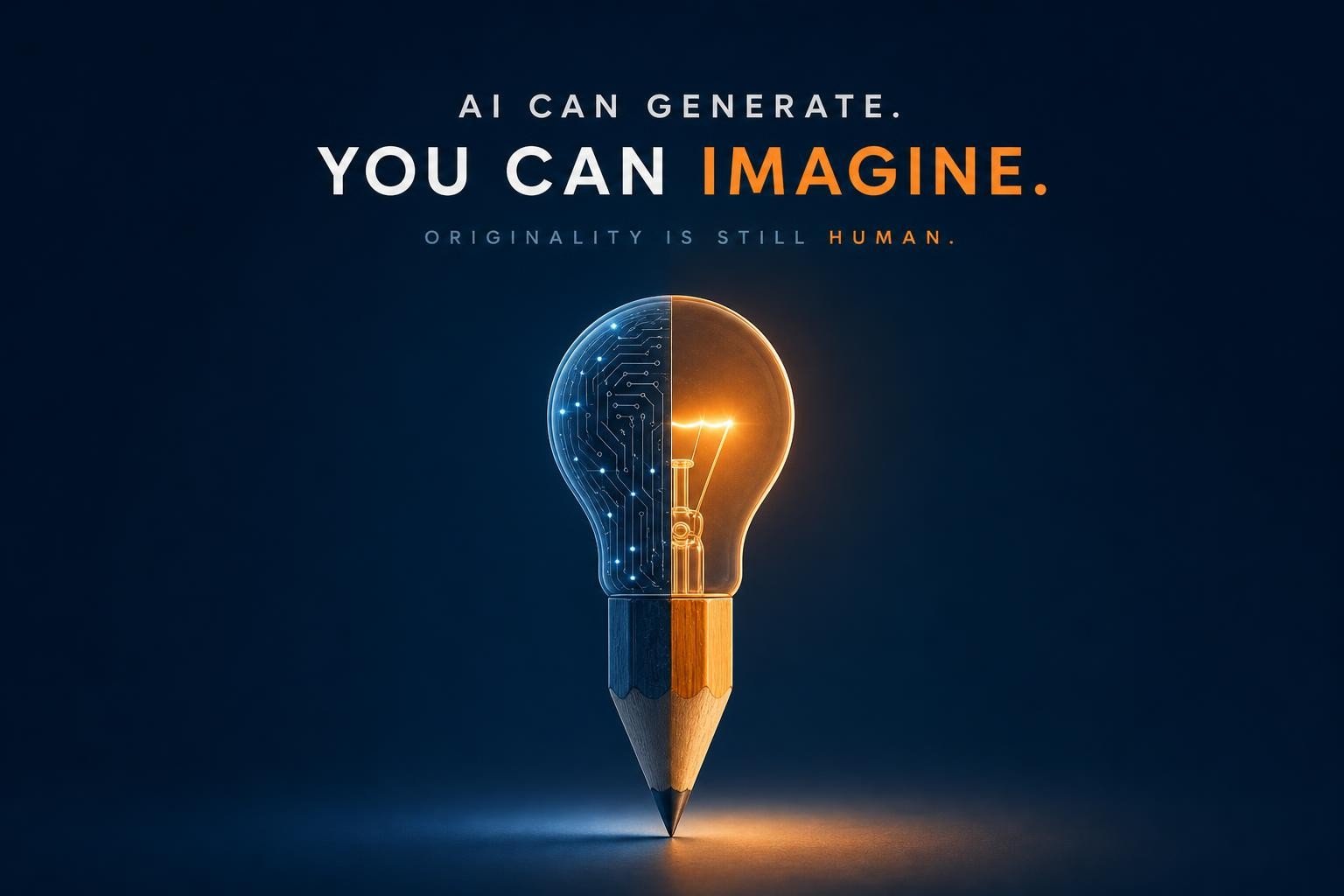
The answer depends less on whether AI can produce attractive output than on how people use it. A model can accelerate expression, but it can also encourage safe decisions, flatten individual style and reward imitation. The technology does not automatically destroy creativity. It changes the conditions in which creativity has to survive.
The appeal of the average answer
Most generative AI systems are designed to produce likely responses to a prompt. That strength makes them useful for drafting, summarizing and transforming information. It can also create a bias toward familiarity.
When a user asks for a conventional business presentation, a concise brand message or a cinematic image, the system is likely to provide a competent version of what those formats usually contain. The result may be efficient, but efficiency is not the same as originality.
This matters because creative work often begins with an uncomfortable choice: an unusual structure, an unexpected reference or an idea that has not yet been tested. A workflow built around instant approval can remove the productive friction that helps such ideas develop.
That risk is especially visible when organizations use AI without a clear point of view. If the same prompts, templates and editing habits circulate across companies, their communications may become formally different but conceptually similar. The problem is not that every output is identical. It is that fewer people may be willing to move far from the familiar.
AI can also widen creative access
There is another side to the argument. Tools that generate text, images, audio or code can lower barriers for people who have strong ideas but limited technical training. A founder can test a campaign concept. A teacher can create alternative learning materials. A small business can produce early design options without hiring a full creative team for every experiment.
For experienced creators, AI can function as a rapid sketchbook. It can produce variations, expose weak assumptions or help translate an idea into a different medium. The final value may come from the human decisions that follow: rejecting the obvious version, combining distant references and shaping the work around a real audience.
Research and policy discussions are still developing. The Stanford AI Index tracks the expanding capabilities and adoption of artificial intelligence, while the U.S. Copyright Office is examining questions around AI-generated material, training data and human authorship. Neither source settles the cultural question of whether AI makes society more or less creative. They do, however, show why the issue is larger than a debate about software features.
The real danger is organizational sameness
Creativity is shaped by incentives. In many workplaces, people are rewarded for speed, consistency and the avoidance of visible mistakes. Generative AI fits neatly into that environment. It can make the first draft faster and the final output more polished, while leaving the underlying strategy unchanged.
That is where businesses should be cautious. A company may increase production while reducing distinctiveness. A marketing team can publish more content without giving customers a stronger reason to remember it. A leadership team can circulate clearer language while saying less that is genuinely useful.
The answer is not to prohibit every AI-assisted process. It is to distinguish between tasks that benefit from standardization and decisions that require judgment. Formatting, transcription and routine versioning are usually easier to automate than brand positioning, investigative reporting, product insight or cultural interpretation.
Organizations should also make room for work that is deliberately unfinished at first. Early concepts need discussion, disagreement and time away from the prompt. If employees are expected to accept the first fluent answer, the company may gain speed at the cost of learning.
Protecting the human edge
Creators who use AI effectively tend to treat it as a collaborator with limitations rather than an authority. They bring stronger references, sharper questions and a willingness to discard most of what the system produces.
That approach requires a defined point of view. It also requires knowledge of the subject. Without expertise, it becomes difficult to recognize when an output is bland, inaccurate or borrowed from a familiar pattern. Human oversight is not a ceremonial final check; it is the part of the process that determines whether the work has meaning.
Businesses can reinforce that standard by asking practical questions:
- What decision is the AI tool helping us make?
- Where would a conventional answer weaken our position?
- Which parts of this work require lived experience, original reporting or specialist judgment?
- Who is accountable for the final result?
These questions belong alongside broader conversations about technology strategy, workplace culture and the skills leaders want to preserve as automation expands.
Creativity will depend on what people choose to value
AI is likely to make average content cheaper and more abundant. That raises the relative value of work with a clear perspective, credible experience and a reason to exist beyond filling a channel.
Some forms of creative production will become more automated. Others will change as professionals spend less time executing routine tasks and more time directing, editing and making judgments. The transition will not be uniform across industries or countries, particularly where access to tools, data and digital skills remains uneven.
The central question is therefore not whether AI is killing creativity. It is whether businesses and individuals will use it to avoid difficult thinking or to make more room for it.
Generative systems can generalize. People decide whether the result is merely familiar or meaningfully their own.