
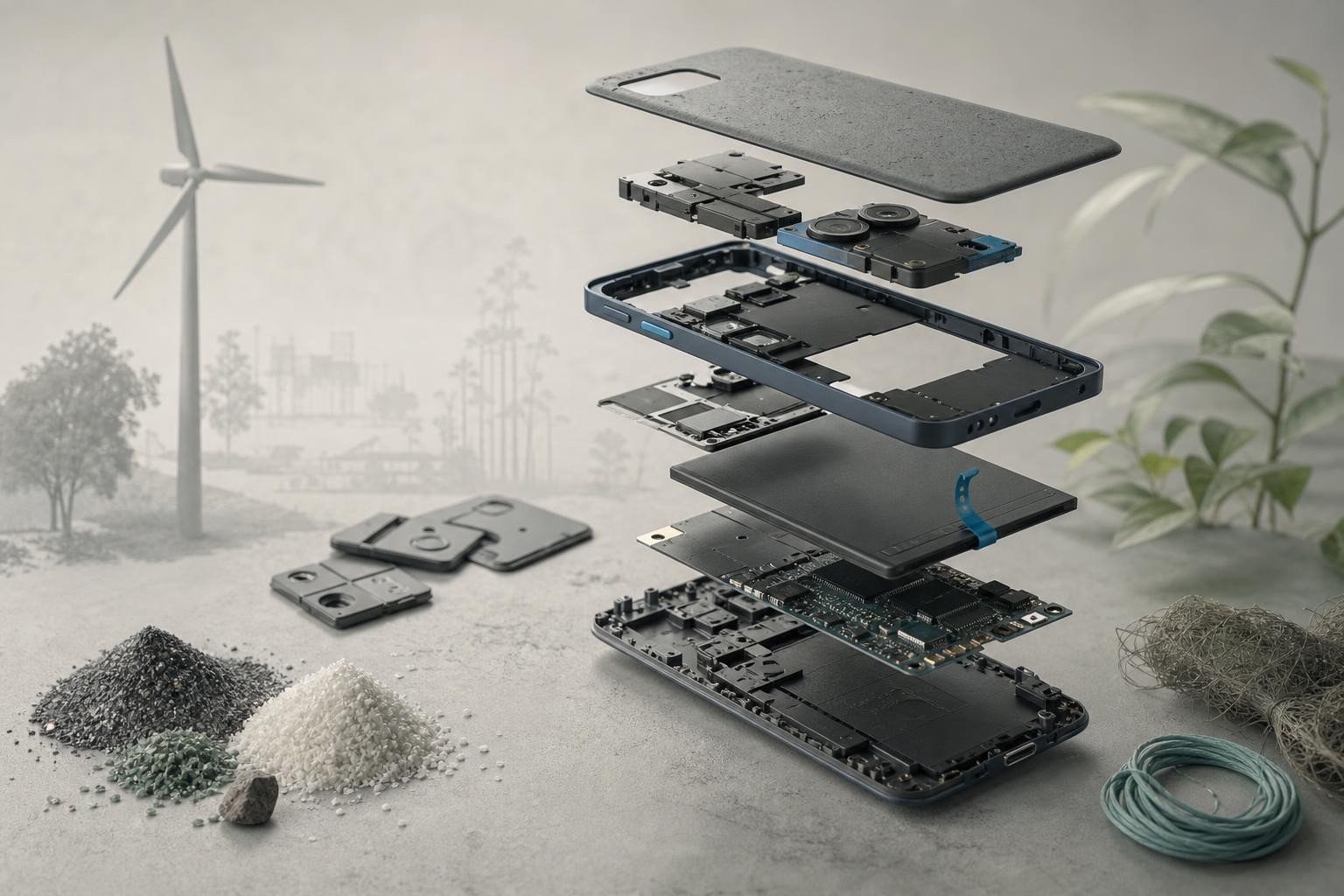
Fairphone entered the consumer-electronics market with a proposition that challenged one of the industry’s strongest habits: replacing devices rather than repairing them. Founded in the Netherlands, the company built its identity around modular products, longer use cycles and greater visibility into environmental and social issues across the supply chain.
That approach gave Fairphone a distinct position in a crowded smartphone market. Instead of competing only on camera quality, processing power or launch frequency, the brand asks customers to evaluate a phone by how long it can remain useful. Repairability became a product feature, a sustainability argument and a commercial differentiator.
A different entry point into the smartphone market
Most major smartphone brands rely on tightly integrated designs. These can produce slim devices, but they often make repairs difficult or uneconomic. Fairphone took the opposite route. Its phones are designed with replaceable modules, allowing users or technicians to change components such as the battery, screen and camera without replacing the entire device.
The company describes its products as repairable by design. The Fairphone website provides repair information and replacement-part access, while independent assessments have also recognised the accessibility of its hardware. iFixit awarded the Fairphone 5 a 10 out of 10 repairability score, reflecting its modular construction and serviceability.
This design choice changes the customer relationship. A buyer is not purchasing a sealed product with a short expected life. The customer is buying a device that can, in principle, be maintained and upgraded over time. That creates a stronger connection between product design and post-sale service than is common in mainstream electronics.
Repairability as a business strategy
Repairability is often treated as a cost or regulatory obligation. Fairphone turned it into part of its market position. The company’s proposition appeals to consumers who value durability, product ownership and lower material waste, as well as organisations seeking more responsible procurement options.
The strategy does not depend on Fairphone matching the largest manufacturers on production scale. Its advantage comes from clarity. Customers can understand what the brand stands for and why its products may look and operate differently from conventional smartphones. In a category dominated by rapid technical cycles, a longer product life offers an alternative measure of value.
There is a commercial trade-off. Modular construction, extended support and responsible sourcing can add complexity and cost. Fairphone devices have generally competed from a smaller scale than mass-market rivals, which can limit purchasing power and make price comparisons difficult. The company therefore needs customers to consider total ownership, rather than judging the device only by its initial price.
Making environmental impact visible
Fairphone’s environmental argument rests on extending product life and reducing the need for complete replacement. Keeping a phone in use for longer can reduce demand for new devices and the materials, energy and logistics associated with manufacturing them. The company also reports efforts involving recycled materials, responsible mining and electronic-waste reduction.
Those claims should be read with appropriate care. No smartphone has zero environmental impact. Manufacturing, component sourcing, transport, energy use and eventual disposal all matter. Fairphone’s contribution is to make those issues more visible and to build design decisions around reducing harm where the company can influence it.
Its impact reporting outlines the company’s approach to materials, worker welfare, climate and circularity. The significance lies less in a claim of perfection than in the decision to treat supply-chain performance and product longevity as central business concerns.
Repair culture becomes part of the brand
Fairphone’s model depends on more than engineering. It requires customers to see repair as normal. Clear instructions, accessible parts and a product architecture that does not punish disassembly all help reduce the friction involved in keeping a device alive.
This also gives the company a distinctive voice in the wider debate over the right to repair. Regulation in Europe and elsewhere is pushing manufacturers toward longer-lasting products and better access to repairs. Fairphone entered that debate early, giving it experience and credibility that larger companies may now need to develop under external pressure.
For readers following the commercial impact of product design, our Innovation and Technology coverage examines how companies use technology to reshape established markets.
The limits of the model
Fairphone’s strategy faces practical limits. A repairable phone still depends on customers choosing repair over replacement. It must also maintain software support, secure component supply and make replacement parts available for years. A modular device cannot solve every environmental problem created during extraction, manufacturing or global distribution.
The brand also operates in a market where consumers have been trained to expect frequent upgrades. Camera improvements, app performance and promotional pricing can make a new mainstream phone appear more attractive than a longer-lasting alternative. Fairphone’s challenge is to convert ethical preference into repeatable purchasing behaviour.
That challenge is precisely what makes the company a useful business case. Its proposition is not based on a temporary feature or a marketing campaign. It requires alignment across industrial design, sourcing, software support, customer education and after-sales service. Weakness in any one of those areas could undermine the promise of longevity.
What other companies can learn
Fairphone demonstrates how a smaller brand can compete by changing the basis of comparison. Rather than imitate the leading firms on every specification, it chose an under-served customer concern and made that concern central to the product.
The lesson extends beyond electronics. A credible sustainability strategy is more persuasive when it is embedded in the product’s construction, maintenance and economics. Repairability gives the customer a tangible way to participate in the brand’s environmental goals. It also creates accountability: if the product is designed to last, the company must support that promise after the sale.
Fairphone has not eliminated the difficult environmental and social questions attached to smartphones. It has made those questions part of the purchasing decision. That is the company’s most important market breakthrough: turning longer life, repair access and supply-chain responsibility into reasons to choose one brand over another.