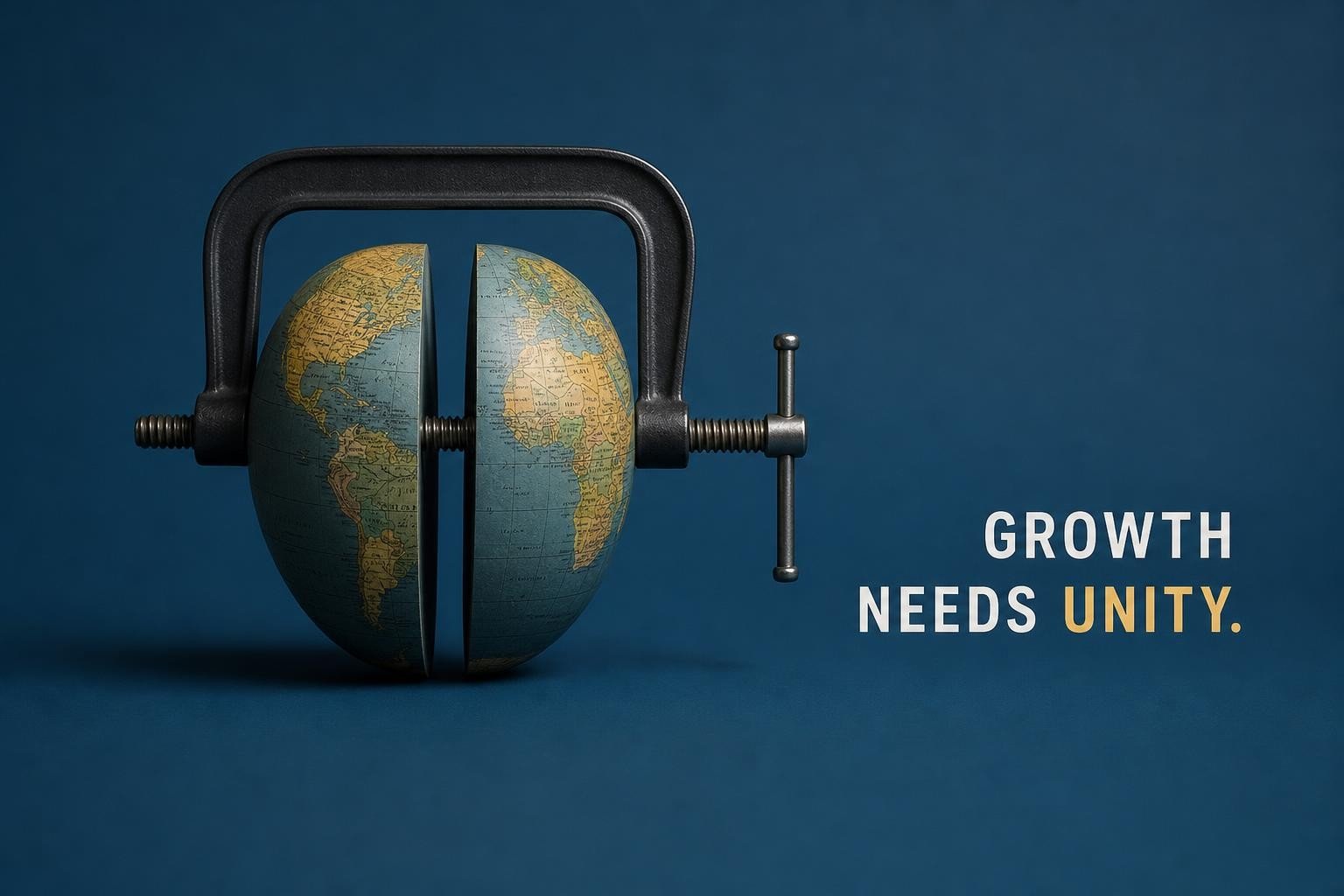
By 2030, the global economy may be more stable than it is today. That does not necessarily mean a return to the relatively predictable environment that shaped the early years of globalisation. The more plausible outcome is a world in which geopolitical risks are managed more deliberately, while businesses operate with higher costs and more political constraints.
The question matters because investment, trade and productivity all depend on confidence. When governments impose export controls, companies redesign supply chains and markets price in conflict risk, economic activity becomes less efficient. Yet disruption can also encourage investment in technology, energy infrastructure and domestic manufacturing.
A calmer world is possible, but a settled one is unlikely
Several pressures will influence the direction of global affairs through the end of the decade. Relations between the United States and China will remain central, affecting technology, finance, manufacturing and trade. Conflicts in Europe and the Middle East may evolve, but their wider economic consequences will depend on whether they remain contained or draw in additional powers.
Other sources of tension will matter as well. Competition over semiconductors, critical minerals, artificial intelligence and clean-energy supply chains is likely to intensify. Governments increasingly view these industries through a national-security lens. That makes a complete return to frictionless global trade improbable, even if military tensions decline.
For businesses, the distinction between crisis and chronic uncertainty is important. A negotiated settlement or a durable ceasefire can reduce immediate risk. It may not reverse years of restrictions, political distrust and supply-chain reorganisation. Companies that have moved production or secured alternative suppliers may keep those arrangements as insurance.
Could the next growth boom be technology-led?
A broad-based boom by 2030 is possible, but it will require more than easing geopolitical tensions. Productivity growth must improve, investment must remain strong and inflation must stay sufficiently controlled for households and companies to plan with confidence.
Artificial intelligence could contribute to a new investment cycle if businesses convert experimentation into measurable gains in output. The impact will depend on reliable infrastructure, workforce adaptation and the spread of useful applications beyond a small group of technology firms. The IMF World Economic Outlook provides a useful reference for the broader forces shaping global growth.
Energy investment will also be decisive. A more resilient and diversified energy system could reduce vulnerability to shocks while supporting industrial expansion. At the same time, higher defence spending, ageing populations and public debt may divert resources from productive investment in many economies.
The business outlook will be uneven
Even in a more stable global environment, growth will not return equally across regions. Economies with strong institutions, skilled workforces and access to capital may capture more of the next investment cycle. Others could face weaker demographics, constrained public finances or limited access to advanced technologies.
Trade may continue, but its pattern is likely to change. The World Trade Organization’s research tracks how trade policy and global integration are evolving. Companies should also follow global affairs and policy developments alongside their financial planning, rather than treating geopolitics as a separate risk register.
The most defensible forecast is therefore neither a return to permanent crisis nor a simple revival of the old growth model. By 2030, tensions may be lower in some theatres and more institutionalised in others. A growth resurgence could emerge, led by technology, energy and infrastructure investment, but it will depend on policy choices that improve productivity and rebuild confidence.
Businesses should plan for opportunity without assuming stability. Scenario analysis, diversified supply chains and disciplined capital allocation are likely to matter more than any single prediction about the future.